

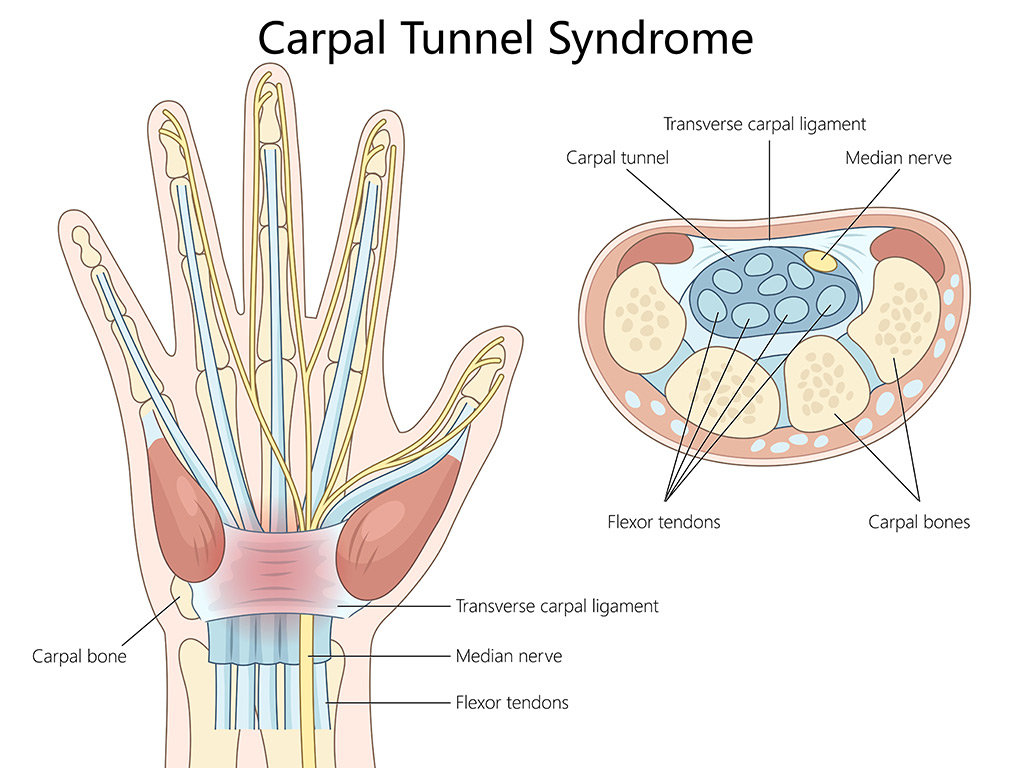
Carpal tunnel syndrome happens when a nerve in your wrist — called the median nerve — gets squeezed. This nerve runs through a narrow space in the wrist known as the carpal tunnel, along with tendons that help bend your fingers and thumb. Because this tunnel is tight and doesn’t stretch, any swelling inside it can press on the nerve and cause symptoms.
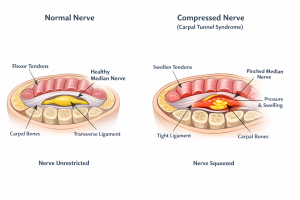
In a healthy wrist, the median nerve has enough room to glide smoothly through the carpal tunnel. The surrounding tendons are calm and not swollen, so the nerve can send clear signals to the fingers.
With carpal tunnel syndrome, the tendons inside the tunnel become irritated or swollen. Since the tunnel can’t expand, this extra pressure pinches the median nerve. That pressure is what leads to numbness, tingling, pain, or weakness in the hand.
Think of it like a traffic tunnel: when traffic flows normally, everything moves smoothly. But if there’s an accident or congestion, everything backs up — and problems start.
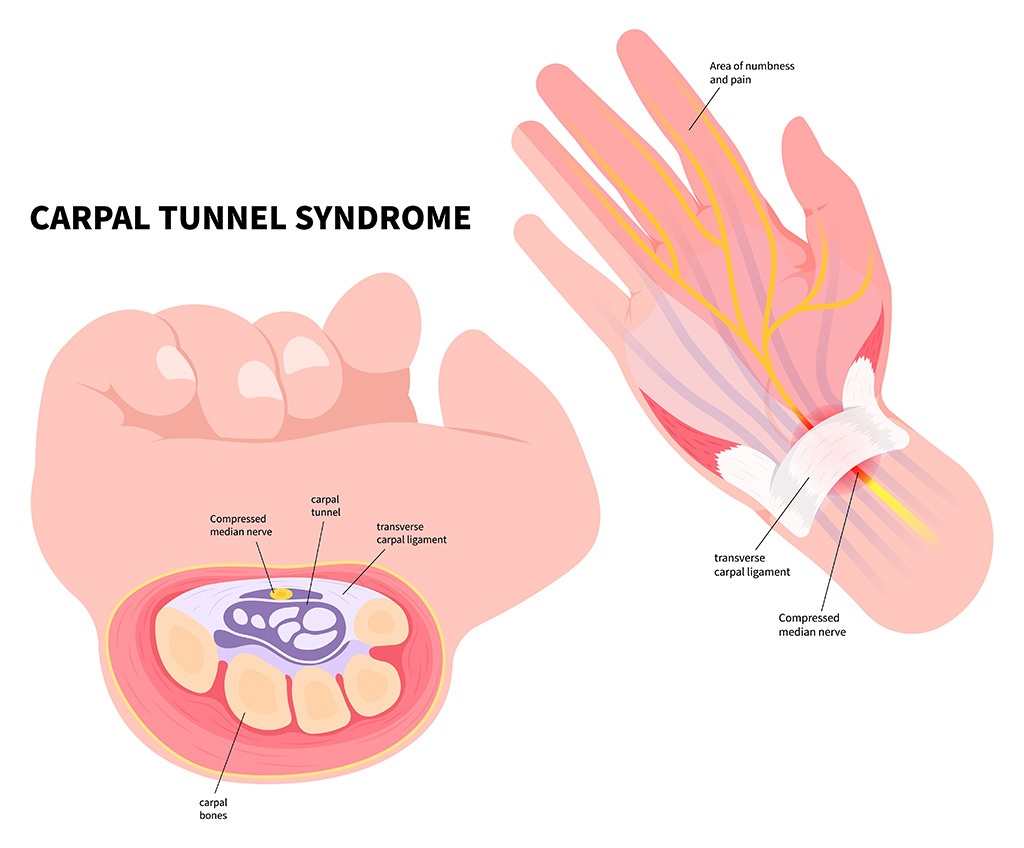
Carpal tunnel symptoms often start slowly and may come and go at first. Common early signs include:
Pain may occur, but numbness and tingling are usually the first clues.
Because carpal tunnel syndrome develops gradually, many people ignore early symptoms. Catching it early gives you more non surgical treatment options and helps prevent long term nerve damage.
Early care may include night splinting, activity changes, and guided hand therapy to reduce pressure on the nerve and restore normal movement.
If your symptoms are lasting, getting worse, or affecting daily activities like gripping, typing, or sleeping, it’s time to be evaluated. Early treatment can make a big difference in recovery and long term hand function.
Your hands work hard for you every day — listening to early warning signs helps keep them strong, comfortable, and reliable.